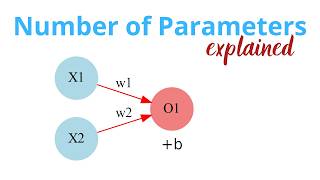
In AI, a weight is a numerical value that represents the importance of a particular input or feature. Weights are used in machine learning models to adjust the impact of each input on the overall output. This allows the model to focus on the most relevant features and ignore the less important ones. The weights are typically learned during the training process, where the model adjusts them to minimize the error between its predictions and the actual outcomes.
The concept of weights is crucial in neural networks, where each connection between nodes has a weight associated with it. These weights determine the strength of the connection and how much influence one node has on another. By adjusting the weights, the model can learn complex patterns and relationships in the data. The weights can be positive or negative, indicating whether the feature has a positive or negative impact on the output.
The process of adjusting the weights is known as backpropagation, where the model calculates the error between its predictions and the actual outcomes and then adjusts the weights to minimize this error. This process is repeated multiple times, with the model refining its weights and improving its performance. The weights can also be initialized randomly or using pre-trained values, which can affect the model's performance and convergence.
In addition to neural networks, weights are also used in other machine learning models, such as linear regression and decision trees. In these models, the weights represent the importance of each feature in making predictions. The weights can be used to interpret the results and understand which features are driving the predictions. This can be useful in a variety of applications, from predicting customer behavior to identifying disease risk factors.
Overall, the concept of weights is a fundamental aspect of machine learning and AI, allowing models to learn from data and make accurate predictions. By adjusting the weights, models can adapt to new data and improve their performance over time. This has numerous applications in areas such as image recognition, natural language processing, and recommender systems.
Think of weights like the importance you give to different factors when making a decision. Imagine you're planning a trip and you need to decide which hotel to stay in. You might give more weight to the hotel's location and less weight to its price, depending on your priorities. Similarly, AI models give more weight to the most important features and less weight to the less important ones, allowing them to make accurate predictions and decisions. Think of it like a balance scale, where the weights determine the balance between different factors.