What is a Neural Network?
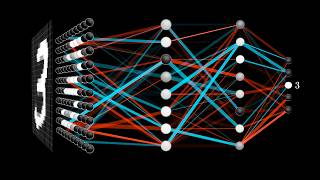
A neural network is a computer system inspired by the structure and function of the human brain. It is composed of layers of interconnected nodes or neurons that process and transmit information. This design allows neural networks to learn from data and improve their performance over time, much like how our brains learn from experiences and adapt to new situations.
Think of a neural network like a team of experts working together to solve a complex problem. Imagine each expert has a specific role, like a data analyst or a decision-maker, and they all communicate with each other to produce a final output. Just as the team can learn and improve over time as they work together, a neural network can learn from data and adapt to new situations, allowing it to make more accurate predictions and decisions.
Why does a Neural Network matter?
Neural networks matter because they have enabled significant advancements in areas like image and speech recognition, natural language processing, and decision-making. Practitioners and builders care about neural networks because they can be trained on large datasets, such as training data, to make accurate predictions or classifications, often using techniques like embeddings. This has led to breakthroughs in applications like self-driving cars, personal assistants, and medical diagnosis.
How does a Neural Network work?
A neural network works by receiving input data, which is then processed through multiple layers of nodes that apply complex transformations. Each node applies a set of weights and biases to the input data, and the output from each node is passed on to the next layer. This process continues until the final output is generated, which can be a classification, prediction, or decision. The network is typically trained using a large dataset and an optimization algorithm that adjusts the weights and biases to minimize errors, a process that can involve transformers and other related AI concepts.
Real-world applications
Neural networks have numerous real-world applications, including image recognition in social media platforms, speech recognition in virtual assistants, and natural language processing in chatbots. They are also used in medical diagnosis to analyze images and predict patient outcomes. Furthermore, neural networks are being explored in areas like finance, where they can be used to predict stock prices and make investment decisions.
Common misconceptions
One common misconception about neural networks is that they are a type of artificial intelligence that can think and learn like humans. While neural networks can learn from data and improve their performance, they are still far from true human-like intelligence. Another misconception is that neural networks are a single, monolithic concept, when in reality, there are many different types of neural networks, each with its own strengths and weaknesses, and often involving other AI concepts like training and embeddings.
Future directions
As neural networks continue to evolve, we can expect to see significant advancements in areas like explainability, transparency, and accountability. This will be critical as neural networks are increasingly used in high-stakes applications, such as healthcare and finance, where the consequences of errors can be severe. By understanding how neural networks work and how they can be improved, we can unlock their full potential and create more intelligent, autonomous systems that can benefit society as a whole.