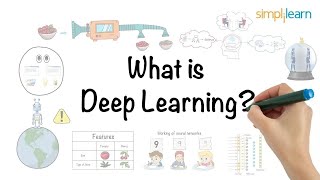
Deep learning is a type of artificial intelligence that allows machines to learn from data. It's called 'deep' because it uses multiple layers of processing to understand complex information. This approach enables computers to recognize patterns, classify objects, and make predictions. Deep learning is particularly useful for tasks like image and speech recognition.
Deep learning works by using neural networks, which are modeled after the human brain. These networks are composed of many interconnected nodes or 'neurons' that process and transmit information. As the network is trained on a dataset, it adjusts the connections between neurons to improve its performance. This process allows the network to learn and improve over time.
One of the key benefits of deep learning is its ability to handle large amounts of data. Traditional machine learning approaches can become overwhelmed by complex datasets, but deep learning can handle vast amounts of information with ease. This makes it particularly useful for applications like self-driving cars, where the computer needs to process a constant stream of data from sensors and cameras.
Deep learning has many real-world applications, including natural language processing, image recognition, and recommender systems. For example, virtual assistants like Siri and Alexa use deep learning to recognize and respond to voice commands. Similarly, image recognition systems use deep learning to identify objects and people in photos.
Despite its many benefits, deep learning also has some limitations. For example, it requires large amounts of data to train, which can be time-consuming and expensive to collect. Additionally, deep learning models can be difficult to interpret, making it challenging to understand why they're making certain predictions.
Think of deep learning like a skilled artist who can recognize and recreate different styles of painting. Imagine the artist is shown many examples of paintings, and over time, they learn to recognize the subtle patterns and characteristics that define each style. Similarly, a deep learning model is trained on a large dataset, allowing it to recognize and learn from complex patterns in the data, much like the artist learns from the paintings.