What is a Vision Language Model?
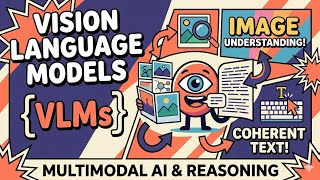
A vision language model is a type of artificial intelligence model that can process and understand both visual data, such as images, and textual data, such as sentences or paragraphs. This allows the model to generate text based on an image, or to generate an image based on text. Vision language models are often built using transformer architectures, which are well-suited for handling multiple types of input data.
Think of a vision language model as a highly skilled translator who can interpret both visual and textual information. Imagine a person who can look at a picture and describe it in detail, or read a sentence and generate a corresponding image. This person can understand the relationships between the visual and textual data, and can use this understanding to generate new text or images.
Why does a Vision Language Model matter?
Vision language models have many potential applications, such as automatically generating image captions, answering questions about images, or even generating new images based on text prompts. Practitioners and builders care about vision language models because they have the potential to improve accessibility, enhance user experience, and enable new types of human-computer interaction. For example, a vision language model could be used to help visually impaired individuals understand the content of images on a website.
How does a Vision Language Model work?
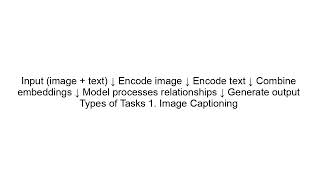
A vision language model typically works by first processing the visual input, such as an image, using a convolutional neural network (CNN). The output of the CNN is then combined with the textual input, such as a sentence or paragraph, using a transformer-based architecture. The model is trained on a large dataset of paired images and text, such as the Common Objects in Context (COCO) dataset, using a process called training data embeddings. This allows the model to learn the relationships between the visual and textual data.
Real-world applications
Vision language models are being used in a variety of real-world applications, such as image captioning, visual question answering, and image generation. For example, a vision language model could be used to automatically generate captions for images on a social media platform, or to answer questions about the content of an image. Vision language models are also being used in areas such as healthcare, where they can be used to analyze medical images and generate reports.
Common misconceptions
One common misconception about vision language models is that they are only useful for generating text based on images. However, vision language models can also be used to generate images based on text, or to answer questions about images. Another misconception is that vision language models require a large amount of labeled training data, which can be time-consuming and expensive to obtain. However, many vision language models can be trained using self-supervised learning techniques, which can reduce the need for labeled data.
Future directions
Vision language models are a rapidly evolving field, and there are many potential future directions for research and development. For example, vision language models could be used to improve accessibility for visually impaired individuals, or to enable new types of human-computer interaction. Additionally, vision language models could be used to analyze and understand complex visual data, such as videos or 3D models.