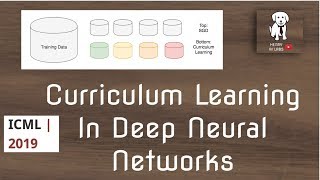
Curriculum learning is a technique used in machine learning where a model is trained on a series of tasks with increasing difficulty. This approach is inspired by the way humans learn, where we start with simple concepts and gradually move on to more complex ones. The idea is to help the model build a strong foundation and gradually improve its performance on more challenging tasks. By doing so, the model can develop a deeper understanding of the subject matter and improve its overall performance.
The process of curriculum learning involves designing a curriculum or a sequence of tasks that the model will be trained on. The tasks are typically ordered from simplest to most complex, and the model is trained on each task for a certain amount of time before moving on to the next one. This approach can be particularly useful when dealing with complex tasks that require a lot of data and computational resources. By breaking down the task into smaller, more manageable parts, the model can learn more efficiently and effectively.
One of the key benefits of curriculum learning is that it can help to prevent overfitting, which occurs when a model is too closely fit to the training data and fails to generalize well to new, unseen data. By training the model on a series of tasks with increasing difficulty, the model is forced to learn more generalizable features that can be applied to a wide range of tasks. This can help to improve the model's performance on new, unseen data and make it more robust to changes in the data distribution.
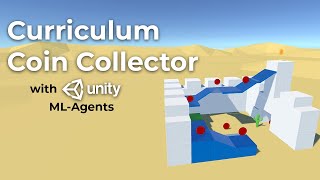
Curriculum learning can be applied to a wide range of machine learning tasks, including image classification, natural language processing, and reinforcement learning. In each of these domains, the curriculum can be designed to reflect the specific requirements of the task and the characteristics of the data. For example, in image classification, the curriculum might start with simple images and gradually move on to more complex ones, such as images with multiple objects or cluttered backgrounds.
Overall, curriculum learning is a powerful technique for improving the performance of machine learning models. By providing a structured and incremental approach to learning, it can help to build more robust and generalizable models that can perform well on a wide range of tasks. This approach can be particularly useful in real-world applications where the data is complex and varied, and the model needs to be able to adapt to changing circumstances.
Think of curriculum learning like a student progressing through school, starting with simple arithmetic and gradually moving on to more complex math concepts like algebra and calculus. Imagine a child learning to play a musical instrument, starting with simple melodies and gradually moving on to more complex pieces. This approach allows the student to build a strong foundation and gradually develop their skills, much like a machine learning model trained using curriculum learning.