What is a Transformer?
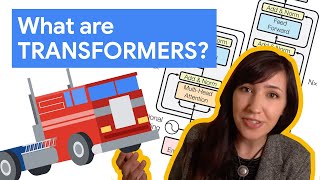
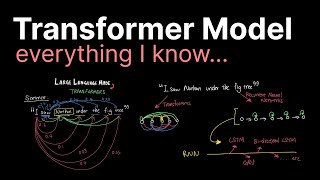
A Transformer is a type of artificial intelligence model designed to handle sequences of data, such as text or speech, in a more efficient and effective way than traditional models. It was introduced in 2017 and has since become a widely used model in natural language processing tasks. The Transformer model relies on self-attention mechanisms to weigh the importance of different parts of the input sequence.
Think of a Transformer like a highly skilled librarian who can quickly and efficiently find the most relevant books in a vast library. Imagine the librarian using a complex system of cataloging and cross-referencing to identify the most important books and weigh their importance, allowing them to provide the most accurate and relevant information to the reader. This is similar to how the Transformer model uses self-attention mechanisms to weigh the importance of different parts of the input sequence and generate accurate output.
Why does the Transformer matter?
The Transformer model matters because it has revolutionized the field of natural language processing, enabling state-of-the-art results in tasks such as machine translation, text classification, and language generation. Practitioners and builders care about the Transformer because it allows them to build more accurate and efficient models, which can be used in a variety of applications, from chatbots to language translation software. The Transformer has also been used in conjunction with other AI concepts, such as training data and embeddings, to achieve even better results.
How does the Transformer work?
The Transformer works by using a self-attention mechanism to weigh the importance of different parts of the input sequence. This allows the model to focus on the most relevant parts of the input data and to capture long-range dependencies more effectively. The Transformer also uses a technique called positional encoding to preserve the order of the input sequence. The model consists of an encoder and a decoder, which work together to generate output based on the input sequence.
Real-world applications
The Transformer is used in a variety of real-world applications, including language translation software, chatbots, and text summarization tools. For example, Google's Translate app uses a Transformer-based model to translate text from one language to another. The Transformer is also used in speech recognition systems, such as those used in virtual assistants like Alexa and Google Assistant. Additionally, the Transformer has been used in tasks such as text classification and sentiment analysis, where it has achieved state-of-the-art results.
Common misconceptions
One common misconception about the Transformer is that it is only useful for natural language processing tasks. However, the Transformer can be used for any task that involves sequences of data, including time series forecasting and speech recognition. Another misconception is that the Transformer is a type of recurrent neural network, when in fact it is a type of feedforward neural network that uses self-attention mechanisms to process sequences of data.
Future developments
The Transformer is a rapidly evolving field, with new architectures and techniques being developed all the time. One area of research is the development of more efficient and scalable Transformer models, which can handle longer input sequences and larger datasets. Another area of research is the application of the Transformer to other domains, such as computer vision and speech recognition.