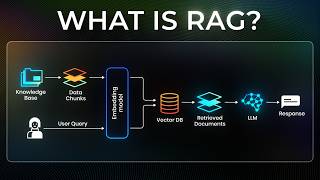
RAG, or Retrieval-Augmented Generation, is a concept in artificial intelligence that combines the strengths of retrieval and generation models. This approach allows AI systems to retrieve relevant information from a database or knowledge base and use it to generate more accurate and informative responses. The RAG model consists of a retriever, a generator, and a knowledge base, which work together to provide better results. The retriever finds relevant information, the generator uses this information to create a response, and the knowledge base stores the information that the retriever can access.
One of the key benefits of RAG is that it can handle complex and open-ended questions more effectively than traditional generation models. By retrieving relevant information from a knowledge base, RAG can provide more accurate and up-to-date responses. This is particularly useful in applications such as customer service, where AI systems need to provide accurate and helpful information to users. RAG can also be used in other areas, such as language translation and text summarization.
The RAG model has several components that work together to provide better results. The retriever is responsible for finding relevant information in the knowledge base, and the generator uses this information to create a response. The knowledge base is a database of information that the retriever can access, and it can be updated and expanded over time. The RAG model can also be fine-tuned and adjusted to improve its performance and accuracy.
RAG has many potential applications in areas such as customer service, language translation, and text summarization. It can be used to provide more accurate and helpful responses to user queries, and it can also be used to generate more informative and engaging content. The RAG model is a powerful tool for building more effective and helpful AI systems, and it has the potential to revolutionize the way we interact with technology.
In conclusion, RAG is a powerful concept in artificial intelligence that has the potential to revolutionize the way we interact with technology. By combining the strengths of retrieval and generation models, RAG can provide more accurate and informative responses to user queries. It has many potential applications in areas such as customer service, language translation, and text summarization, and it is a key area of research and development in the field of AI.
Think of RAG like a librarian who helps a writer find relevant information for an article. Imagine the librarian searching through a vast library to find the most relevant books and articles, and then using that information to help the writer create a well-informed and engaging piece of writing. The librarian is like the retriever, the library is like the knowledge base, and the writer is like the generator. Just as the librarian helps the writer to create a better article, RAG helps AI systems to provide more accurate and informative responses to user queries.