What is Top-k Sampling?
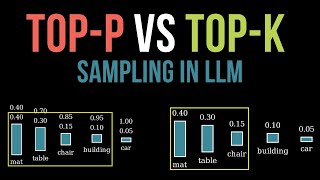
Top-k sampling is a technique used in natural language processing and other areas of artificial intelligence to select the top-k most likely options from a large set of possibilities. This is often used in text generation tasks, such as language translation or text summarization, where the model needs to choose the most likely next word in a sequence. The k in top-k sampling refers to the number of options to select, which can vary depending on the specific task and model architecture.
Think of top-k sampling like a restaurant menu, where the model is the waiter and the options are the dishes. Imagine the waiter has to recommend the top-k most popular dishes to a customer, based on the customer's preferences and the restaurant's menu. The waiter uses the customer's preferences and the menu to assign a popularity score to each dish, and then selects the top-k dishes to recommend. This is similar to how top-k sampling works in artificial intelligence, where the model assigns a probability score to each option and selects the top-k based on those scores.
Why does Top-k Sampling matter?
Top-k sampling matters because it allows models to focus on the most likely options and avoid getting bogged down in less plausible possibilities. This can improve the efficiency and accuracy of text generation tasks, and is particularly important when working with large language models such as transformers. By selecting the top-k options, models can reduce the computational resources required for text generation and improve the overall quality of the generated text.
How does Top-k Sampling work?
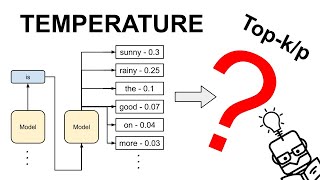
Top-k sampling works by first generating a set of possibilities, such as a list of words that could come next in a sentence. The model then assigns a probability score to each option, based on the context and the model's training data. The top-k options are then selected based on these probability scores, and the model proceeds with the most likely option. This process can be repeated multiple times, with the model generating new options and selecting the top-k based on the updated probability scores.
Real-world applications
Top-k sampling is used in a variety of real-world applications, including language translation, text summarization, and chatbots. For example, a language translation model might use top-k sampling to select the most likely translation of a sentence, based on the context and the model's training data. A chatbot might use top-k sampling to select the most likely response to a user's question, based on the conversation history and the model's knowledge base.
Common misconceptions
One common misconception about top-k sampling is that it is only used in text generation tasks. However, top-k sampling can be used in any task where a model needs to select the most likely options from a large set of possibilities. Another misconception is that top-k sampling is only used with large language models such as transformers, when in fact it can be used with a variety of model architectures and sizes.
Relation to other AI concepts
Top-k sampling is often used in conjunction with other AI concepts, such as embeddings and training data. For example, a model might use embeddings to represent words or other units of text, and then use top-k sampling to select the most likely next word in a sequence. The model's training data can also inform the top-k sampling process, by providing the context and probability scores used to select the top-k options.