What is Text Generation?
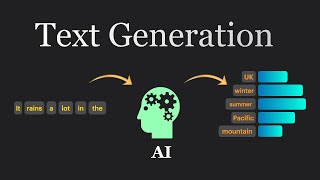
Text generation is a technique used in artificial intelligence to create human-like text based on a given prompt or input. This can range from simple sentences to entire articles or books. The goal of text generation is to produce text that is coherent, natural, and often indistinguishable from text written by a human.
Think of text generation like a highly skilled writer who can produce high-quality content on demand. Imagine a writer who can read and understand a vast library of books and articles, and then use that knowledge to write new content that is similar in style and structure. This writer can work at incredible speeds, producing hundreds of pages of content in a matter of minutes, and can even adapt to different styles and genres with ease.
Why does Text Generation matter?
Text generation matters because it has many practical applications, such as automating content creation, improving language translation, and enhancing chatbot conversations. Practitioners and builders care about text generation because it can help them create more realistic and engaging interactions with users. Additionally, text generation can be used to generate text for specific domains, such as medical or legal documents, which can help reduce the workload of human writers.
How does Text Generation work?
Text generation works by using complex algorithms, such as transformers and recurrent neural networks, to analyze and learn from large datasets of text. These algorithms can learn patterns and relationships in language, allowing them to generate new text that is similar in style and structure. The process typically involves training a model on a large dataset of text, and then using that model to generate new text based on a given prompt or input. Embeddings, which are vector representations of words, are also used to help the model understand the context and meaning of the input text.
Real-world applications
Text generation is used in many real-world applications, such as language translation apps, chatbots, and content generation platforms. For example, language translation apps use text generation to translate text from one language to another in real-time. Chatbots use text generation to respond to user queries and engage in conversation. Content generation platforms use text generation to automate the creation of content, such as news articles and social media posts.
Common misconceptions
One common misconception about text generation is that it is only used for generating fake or misleading content. However, text generation can be used for many legitimate purposes, such as automating content creation and improving language translation. Another misconception is that text generation is only possible with large amounts of training data, but advances in techniques such as few-shot learning have made it possible to generate high-quality text with limited data.
Future developments
The field of text generation is rapidly evolving, with new techniques and models being developed all the time. One area of research is focused on improving the coherence and consistency of generated text, which can be a challenge, especially for longer texts. Another area of research is focused on developing more specialized models that can generate text for specific domains or industries.