What is Text-to-Image?
Text-to-image is a concept in artificial intelligence where models are trained to generate images based on text descriptions. This technology has the potential to revolutionize the way we create and interact with visual content. With the help of text-to-image models, users can create images that were previously impossible to produce without extensive graphic design experience.
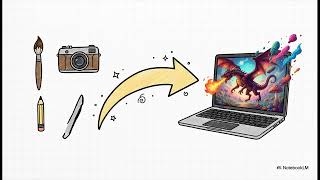
Think of text-to-image models like highly skilled artists who can paint a picture based on a written description. Imagine being able to describe a scene or object to someone, and they can bring it to life with their brushstrokes. Text-to-image models work in a similar way, using the text description as input to generate an image that represents the described scene or object. Think of it as a form of automated painting, where the model is the painter and the text description is the inspiration.
Why does Text-to-Image matter?
Text-to-image matters because it has the potential to democratize image creation, making it accessible to people who lack graphic design skills. Practitioners and builders care about this concept because it can be used in a wide range of applications, from generating artwork to creating images for advertising and marketing campaigns. Additionally, text-to-image models can be used to generate images that are similar in style to existing images, which can be useful for tasks such as image augmentation and data generation for training other AI models.
How does Text-to-Image work?
Text-to-image models typically use a combination of natural language processing (NLP) and computer vision techniques to generate images from text descriptions. The process starts with the text description being processed by an NLP model, such as a transformer, which generates a representation of the text that can be used by the image generation model. The image generation model then uses this representation to generate an image, often using a technique called generative adversarial networks (GANs). The GANs consist of two models: a generator that generates images and a discriminator that evaluates the generated images and tells the generator whether they are realistic or not.
Real-world applications
Text-to-image models have many real-world applications, including generating artwork, creating images for advertising and marketing campaigns, and generating images for use in video games and other forms of interactive media. For example, a company could use a text-to-image model to generate images of products for an e-commerce website, without having to take photographs of each product. Another example is using text-to-image models to generate images of cities or landscapes for use in video games or virtual reality applications.
Common misconceptions
One common misconception about text-to-image models is that they can generate images that are indistinguishable from real photographs. While text-to-image models have made significant progress in recent years, they are still not able to generate images that are completely realistic. Another misconception is that text-to-image models can only generate simple images, such as icons or logos. However, many modern text-to-image models are capable of generating complex and detailed images, such as landscapes or portraits.
Future developments
The field of text-to-image is rapidly evolving, with new models and techniques being developed all the time. One area of research that is currently being explored is the use of text-to-image models for tasks such as image editing and manipulation. This could potentially allow users to edit images using text commands, such as 'change the color of the sky to blue' or 'add a tree to the background'.