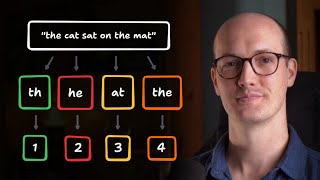
What is Tokenization?
Tokenization is the process of breaking down a sequence of text into smaller, meaningful units called "tokens." These tokens serve as the fundamental building blocks that artificial intelligence models, particularly large language models like `transformers`, can understand and process. It's the very first step in preparing text for any natural language processing task.
Think of preparing a large, complex meal. You don't just throw all the raw ingredients into a pot. Instead, you first "tokenize" them: chopping vegetables, dicing meat, measuring spices. Each chopped piece or measured amount is a "token" that the recipe (the AI model) can then process and combine in specific ways to create the final dish (the AI's output).
Why does Tokenization matter?
AI models cannot directly understand human language as a string of characters. They work with numerical data. Tokenization converts raw text into a structured sequence of tokens, which can then be mapped to numerical `embeddings` or indices. This standardization allows models to learn patterns, relationships, and meanings within language, making tasks like translation, summarization, and question-answering possible. Without effective tokenization, models would struggle to generalize across different words and contexts.
How does Tokenization work?
There are several ways to tokenize text. The simplest form might split text by spaces and punctuation, treating each word as a token. However, more advanced methods, like subword tokenization (e.g., Byte-Pair Encoding or WordPiece), are commonly used today. These methods break down words into smaller, frequently occurring subword units (e.g., "unbreakable" might become "un", "break", "able"). This helps handle new or rare words, reduces the overall vocabulary size, and allows models to understand morphological variations. Each unique token is then assigned a numerical ID, forming a `vocabulary` that the AI model uses during its `training` phase.
Real-world applications
Tokenization is fundamental to almost every AI application involving text. Search engines use it to break down queries and document content to find relevant matches. Chatbots and virtual assistants rely on tokenization to understand user commands and generate appropriate responses. Machine translation systems tokenize sentences in one language, process them, and then generate tokens in another language. It's also critical in sentiment analysis, text summarization, and content moderation, where understanding individual word or subword meanings is key.
Common misconceptions
A common misconception is that tokenization is simply splitting text by spaces. While space-based splitting is a type of tokenization, modern AI often uses more sophisticated subword tokenization techniques. These techniques can split words like "running" into "run" and "##ning" (where ## indicates a subword part), allowing the model to recognize the base word "run" and the grammatical suffix. This approach helps manage a vast `vocabulary` more efficiently and handles variations of words that might not have been seen during `training`.