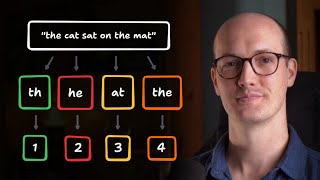
In the context of artificial intelligence, a token is a fundamental unit of text or data that a model can process and understand. This can be a word, character, or even a small group of characters. Tokens are used to break down complex text into smaller, more manageable pieces that a model can analyze and generate text from. The process of breaking down text into tokens is called tokenization. Tokens can also be used to represent other types of data, such as images or sounds.
The concept of tokens is important in natural language processing, as it allows models to understand the structure and meaning of text. By breaking down text into individual tokens, models can identify patterns and relationships between words and generate coherent text. Tokens can also be used to represent different parts of speech, such as nouns, verbs, and adjectives. This allows models to understand the context and meaning of text more accurately. Additionally, tokens can be used to represent emotions and sentiment in text, which is useful for applications such as sentiment analysis.
Tokenization is a crucial step in many AI applications, including language translation, text summarization, and chatbots. By breaking down text into tokens, models can identify the most important information and generate relevant responses. Tokens can also be used to represent different languages and dialects, which is useful for applications such as language translation. Furthermore, tokens can be used to represent different formats of text, such as paragraphs, sentences, and phrases. This allows models to understand the structure and organization of text more accurately.
The use of tokens has many benefits, including improved accuracy and efficiency in AI applications. By breaking down text into smaller, more manageable pieces, models can process and analyze text more quickly and accurately. Tokens can also be used to represent different types of data, which allows models to learn from a wider range of sources. Additionally, tokens can be used to improve the robustness and reliability of AI models, by allowing them to handle different types of text and data. This is especially useful for applications such as text classification and sentiment analysis.
In conclusion, tokens are a fundamental concept in artificial intelligence, and are used to break down complex text into smaller, more manageable pieces. The use of tokens has many benefits, including improved accuracy and efficiency in AI applications. By understanding how tokens work, developers can build more effective and efficient AI models that can process and analyze text more accurately. This can lead to many exciting applications, such as language translation, text summarization, and chatbots. By leveraging the power of tokens, developers can unlock new possibilities for AI and build more intelligent and interactive systems.
Think of a token like a single LEGO brick, which can be combined with other bricks to build complex structures. Imagine a large box of LEGO bricks, where each brick represents a single token. Just as LEGO bricks can be used to build different structures, tokens can be used to represent different words, characters, or ideas. By combining tokens in different ways, AI models can generate complex text and build new meanings, just like a child builds a castle with LEGO bricks.