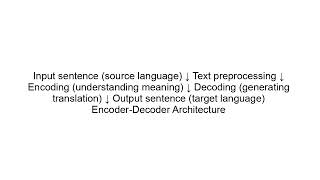
Machine translation is a technique used to translate text from one language to another using artificial intelligence. This technique has improved significantly over the years, allowing for more accurate and efficient translations. Machine translation systems can be trained on large amounts of data, enabling them to learn the patterns and nuances of different languages. As a result, they can translate text in real-time, making it a valuable tool for communication across languages.
Machine translation has many applications, including language translation apps, website translation, and document translation. It can also be used in fields such as healthcare, education, and business, where communication across languages is crucial. However, machine translation is not perfect and can make mistakes, especially when dealing with complex or nuanced texts. Therefore, it is often used in conjunction with human translators to ensure accuracy and quality.
The process of machine translation involves several steps, including text analysis, language modeling, and translation. The system analyzes the input text, identifies the language and context, and then generates a translation based on its training data. The quality of the translation depends on the quality of the training data, the complexity of the text, and the capabilities of the machine translation system.
There are different types of machine translation systems, including rule-based systems, statistical systems, and neural systems. Rule-based systems use predefined rules to translate text, while statistical systems use statistical models to generate translations. Neural systems, on the other hand, use artificial neural networks to learn the patterns and nuances of languages. Each type of system has its strengths and weaknesses, and the choice of system depends on the specific application and requirements.
In recent years, machine translation has become increasingly popular, with many companies and organizations using it to communicate with customers, partners, and employees across languages. The technology has also improved significantly, with advances in deep learning and natural language processing enabling more accurate and efficient translations. As a result, machine translation is becoming an essential tool for global communication, enabling people to connect and interact with each other across languages and cultures.
Think of machine translation like a skilled human interpreter who can understand and speak multiple languages. Imagine a person who can listen to a conversation in one language and instantly translate it into another language, allowing people who speak different languages to communicate with each other seamlessly. Just like a human interpreter, machine translation systems can facilitate communication across languages, but instead of using human intelligence, they use artificial intelligence and complex algorithms to generate translations.