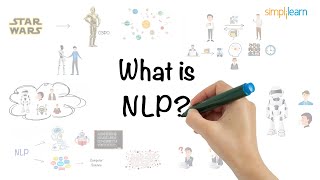
Natural Language Processing, or NLP, is a subfield of artificial intelligence that deals with the interaction between computers and humans in natural language. It's a complex task, as human language is full of nuances, ambiguities, and context-dependent meanings. NLP enables computers to process, understand, and generate human language, allowing for applications such as language translation, sentiment analysis, and text summarization. This technology has many practical uses, including chatbots, virtual assistants, and language translation software.
NLP involves a range of tasks, including tokenization, which breaks down text into individual words or tokens, and part-of-speech tagging, which identifies the grammatical category of each word. It also includes named entity recognition, which identifies specific entities such as names, locations, and organizations, and dependency parsing, which analyzes the grammatical structure of a sentence. These tasks are crucial for enabling computers to understand the meaning and context of human language. By analyzing and understanding human language, NLP can help computers to better serve human needs.
One of the key challenges in NLP is dealing with the ambiguity and uncertainty of human language. Humans use language in a highly contextual and often ambiguous way, with words and phrases having multiple meanings depending on the situation. To overcome this challenge, NLP systems use machine learning algorithms and statistical models to analyze large datasets of text and learn patterns and relationships in language. This enables them to make predictions and inferences about the meaning of text, even when it's ambiguous or unclear.
NLP has many real-world applications, including customer service chatbots, language translation software, and sentiment analysis tools. It's also used in search engines to improve the relevance of search results, and in virtual assistants such as Siri and Alexa to enable voice-activated commands. Additionally, NLP is used in text analysis tools to extract insights and meaning from large datasets of text, such as social media posts or customer reviews. This technology has the potential to revolutionize the way we interact with computers and access information.
The future of NLP is exciting and rapidly evolving, with new technologies and techniques being developed all the time. One of the key areas of research is in multimodal NLP, which involves analyzing and understanding language in combination with other modalities such as vision and speech. This has the potential to enable computers to better understand human communication and interaction, and to develop more sophisticated and human-like interfaces. As NLP continues to advance, we can expect to see even more innovative and powerful applications of this technology in the future.
Think of NLP like a super-smart librarian who can read and understand all the books in a library, and then use that knowledge to answer questions and provide information to people who ask. Imagine being able to ask this librarian any question, and getting a precise and accurate answer, even if the question is complex or ambiguous. This is essentially what NLP does, but instead of books, it analyzes and understands human language, and uses that knowledge to provide insights and information to computers and humans alike.