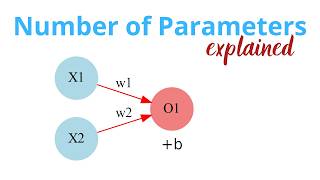
What is a Parameter?
A parameter is a variable that is part of a machine learning model, controlling its behavior and influencing the predictions it makes. Parameters are learned from the training data and are used to make predictions on new, unseen data. The values of these parameters are adjusted during the training process to minimize the difference between the model's predictions and the actual outcomes.
Think of a parameter like a knob on a musical instrument, where adjusting the knob changes the sound that is produced. Imagine that the instrument is a machine learning model, and the knob is a parameter that controls the model's behavior. Just as a musician needs to adjust the knobs on their instrument to produce the right sound, a machine learning practitioner needs to adjust the parameters of their model to produce the right predictions.
Why does a Parameter matter?
Parameters are crucial in machine learning because they allow models to learn from data and make accurate predictions. Practitioners and builders care about parameters because they need to understand how to adjust them to improve the performance of their models. This is particularly important in models like transformers, where parameters play a key role in controlling the attention mechanism.
How does a Parameter work?
A parameter works by being adjusted during the training process to minimize the error between the model's predictions and the actual outcomes. This is typically done using an optimization algorithm, such as stochastic gradient descent, which updates the parameters in the direction that minimizes the error. The parameters are often initialized with random values and then updated based on the training data.
Real-world applications
Parameters are used in a wide range of real-world applications, including image recognition, natural language processing, and recommender systems. For example, in a recommender system, parameters might be used to control the weights given to different factors, such as user behavior and item attributes. In image recognition, parameters might be used to control the features that are extracted from images, such as edges and textures.
Common misconceptions
One common misconception about parameters is that they are the same as hyperparameters. However, while both are important in machine learning, they serve different purposes. Parameters are learned from the training data, while hyperparameters are set before training and control the learning process. Another misconception is that parameters are only used in complex models like transformers, when in fact they are used in a wide range of models, including simple linear models.
Relationship to other AI concepts
Parameters are closely related to other AI concepts, such as embeddings and training data. Embeddings are a type of parameter that is used to represent categorical variables, such as words or items, as dense vectors. Training data is used to learn the values of parameters, and the quality of the training data can have a big impact on the performance of the model.