What is Parameter-efficient prompting?
Parameter-efficient prompting (PEP) is a set of methods that adjust only a small number of prompt‑related variables—such as soft tokens, prefix embeddings, or lightweight adapters—while leaving the underlying language model unchanged.
Think of a car where you only adjust the steering wheel and accelerator knobs to get a different driving feel, rather than rebuilding the entire engine.
Why does it matter?
Product teams want high performance without the cost of full model fine‑tuning. PEP delivers comparable gains with far less compute, data, and engineering effort, making it attractive for rapid experimentation and budget‑constrained projects.
How does it work?
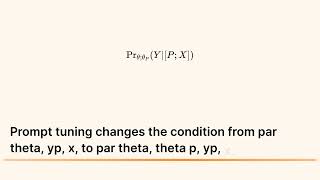
Instead of updating billions of weights, PEP inserts a short trainable vector sequence (soft prompts) or a tiny adapter module into the model’s input stream. During a brief training loop, only these new vectors are optimized against a target task, while the original model weights stay frozen. The result is a customized behavior that the model interprets as part of its natural language context.
Real-world applications
1. **Customer support bots** – A company can quickly specialize a general‑purpose assistant to answer product‑specific FAQs by learning a handful of prompt tokens.
2. **Marketing copy generation** – Teams can steer a foundation model to adopt a brand’s tone by training a small prefix, avoiding costly re‑training of the whole model.
3. **Domain‑specific analytics** – Researchers add a lightweight adapter to make a large language model understand specialized jargon (e.g., medical or legal) without needing a full domain model.
Common misconceptions
- *PEP replaces fine‑tuning entirely*: It’s complementary; for very high‑stakes or highly specialized tasks, full fine‑tuning may still be needed.
- *Only works for tiny models*: Even the largest transformer models benefit because the trainable portion remains tiny, keeping resource use low.