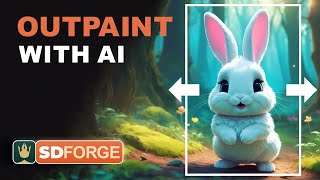
Outpainting is a technique used in artificial intelligence to generate new content beyond the boundaries of an existing image. This can be useful for creating panoramic views, filling in missing parts of an image, or even generating entirely new images based on a given style or theme. The process involves training a model on a dataset of images and then using that model to generate new content that is consistent with the original image. The goal is to create a seamless transition between the original image and the generated content.
Outpainting is often used in applications such as image editing and manipulation, where it can be used to remove objects or fill in missing parts of an image. It can also be used in artistic applications, such as generating new artwork or creating special effects for films and video games. The technique has the potential to revolutionize the way we create and manipulate visual content, and it has many potential applications in fields such as advertising, entertainment, and education. However, it also raises important questions about the ownership and authorship of generated content.
One of the key challenges of outpainting is ensuring that the generated content is consistent with the original image. This requires the model to have a deep understanding of the style, texture, and composition of the original image, as well as the ability to generate new content that is consistent with those characteristics. To achieve this, researchers use a variety of techniques, including generative adversarial networks (GANs) and neural style transfer. These techniques allow the model to learn the patterns and structures of the original image and generate new content that is consistent with those patterns.
Outpainting has the potential to be a powerful tool for a wide range of applications, from artistic creation to commercial image manipulation. However, it also raises important questions about the ethics and implications of generated content. As the technology continues to evolve, it will be important to consider the potential consequences of outpainting and to develop guidelines and regulations for its use. This will require a collaborative effort between researchers, industry leaders, and policymakers to ensure that the technology is developed and used in a responsible and beneficial way.
As outpainting technology continues to advance, we can expect to see new and innovative applications of the technique. For example, it could be used to generate new artwork or special effects for films and video games. It could also be used in advertising and marketing, where it could be used to create personalized and dynamic ads. The possibilities are endless, and it will be exciting to see how outpainting is used in the future.
Think of outpainting like a painter who is given a partially completed canvas and asked to fill in the rest of the image. Imagine the painter studying the existing brushstrokes, colors, and textures, and then using that information to create a seamless extension of the original work. The goal is to create a finished product that is indistinguishable from the original, with the new content blending perfectly with the existing image.