What is Self-Supervised Learning?
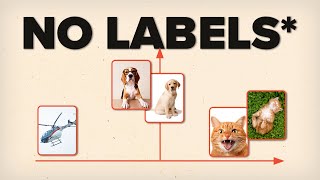
Self-Supervised Learning is a type of machine learning where models learn from unlabeled data, using their own predictions or outputs as a form of supervision. This technique is useful when labeled training data is scarce or expensive to obtain. It has gained popularity with the rise of deep learning models like transformers.
Think of Self-Supervised Learning like a child learning to speak, who listens to the sounds and rhythms of language without being explicitly taught the rules of grammar. Imagine a model that can learn to recognize objects in images by generating its own descriptions of the images, without being given any labeled examples. Think of it like a puzzle, where the model learns to fit the pieces together on its own, without being given the solution.
Why does Self-Supervised Learning matter?
Practitioners care about Self-Supervised Learning because it allows them to leverage large amounts of unlabeled data, which is often readily available. This can lead to better model performance and more efficient use of resources. By using Self-Supervised Learning, developers can also reduce their reliance on labeled training data, which can be time-consuming and costly to create.
How does Self-Supervised Learning work?
Self-Supervised Learning works by training a model on a task that does not require labeled data, such as predicting the next word in a sentence or generating an image from a text prompt. The model learns to represent the data in a way that is useful for the task at hand, and these representations can then be fine-tuned for specific downstream tasks using labeled data. This process is related to the concept of embeddings, where models learn to represent complex data in a compact and meaningful way.
Real-world applications
Self-Supervised Learning has many real-world applications, including natural language processing, computer vision, and speech recognition. For example, it can be used to generate synthetic data for training autonomous vehicles or to improve the performance of language models like those used in virtual assistants. Self-Supervised Learning can also be used to pre-train models that are then fine-tuned for specific tasks, such as sentiment analysis or object detection.
Common misconceptions
One common misconception about Self-Supervised Learning is that it is a replacement for supervised learning. However, Self-Supervised Learning is often used in conjunction with supervised learning, where the self-supervised model is fine-tuned on labeled data for a specific task. Another misconception is that Self-Supervised Learning requires a large amount of computational resources, but this is not always the case, as some self-supervised models can be trained on relatively small datasets.
Future directions
Self-Supervised Learning is a rapidly evolving field, with new techniques and applications being developed all the time. One area of research is in the use of Self-Supervised Learning for multimodal learning, where models are trained on multiple types of data, such as text, images, and audio. This has the potential to enable more sophisticated and human-like AI models that can understand and interact with the world in a more nuanced way.