What is Speculative Decoding?
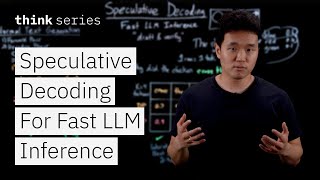
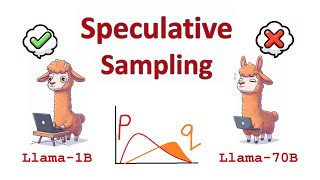
Speculative decoding is a technique that lets a language model produce text more quickly by first generating several possible next words with a smaller, faster model, then checking them with the main model.
Think of speculative decoding like a junior writer drafting a paragraph quickly, then a senior editor reviewing each sentence and only rewriting the parts that need improvement.
Why does it matter?
Speed matters when users expect instant responses—chatbots, search assistants, or real‑time translation. Traditional decoding runs the full model token by token, which can be slow and costly. Speculative decoding cuts latency and compute without sacrificing quality, making AI services more affordable and user‑friendly.
How does it work?
1. A lightweight “draft” model predicts a short sequence of tokens (e.g., 5‑10 words).
2. The main, larger model reviews the draft. For each token, it either accepts it (if it agrees) or rejects it and generates a new token.
3. Accepted tokens are emitted to the user, while rejected ones are replaced by the main model’s output. This back‑and‑forth continues until the desired length is reached.
The key idea is that the cheap draft model does most of the work, and the expensive model only intervenes when needed, similar to a proof‑reader correcting a first draft.
Real‑world applications
- **Chat interfaces**: Customer‑support bots can answer in milliseconds, keeping conversations fluid.
- **Live transcription**: Speech‑to‑text services can deliver captions faster, improving accessibility.
- **Creative writing tools**: Story generators suggest longer passages quickly, letting writers iterate without waiting for each word.
Common misconceptions
- *It always reduces quality*: The main model still validates every token, so final output quality remains comparable to full decoding.
- *Only works for small models*: Even large models benefit because the draft model can be a much smaller version of the same architecture, offering substantial speedups.
Related terms include "beam search," "top‑k sampling," and "token caching," which also aim to balance speed and output quality.