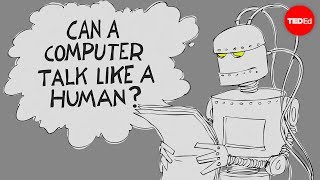
The Turing test is a method for determining whether a machine, such as a computer, is capable of thinking like a human being. This test was first proposed by Alan Turing in 1950 and has since become a benchmark for measuring the intelligence of artificial intelligence systems. The test involves a human evaluator engaging in natural language conversations with both a human and a machine, without knowing which is which. If the evaluator cannot reliably distinguish the machine from the human, the machine is said to have passed the Turing test.
The Turing test is not a perfect measure of intelligence, as it only evaluates a machine's ability to exhibit intelligent behavior in a specific context. However, it has been widely used as a benchmark for assessing the capabilities of AI systems. The test has also been the subject of much debate and controversy, with some arguing that it is too narrow or simplistic a measure of intelligence. Despite these limitations, the Turing test remains a widely recognized and influential concept in the field of artificial intelligence.
One of the key challenges in developing machines that can pass the Turing test is creating systems that can understand and respond to natural language inputs in a way that is indistinguishable from a human. This requires not only advanced language processing capabilities but also a deep understanding of human behavior, emotions, and social norms. Researchers have made significant progress in recent years in developing AI systems that can engage in human-like conversations, but creating machines that can truly think and behave like humans remains a long-term goal.
The Turing test has also been used in a variety of applications, from customer service chatbots to virtual assistants. In these contexts, the test is often used to evaluate the effectiveness of a machine's language processing capabilities and its ability to provide helpful and accurate responses to user queries. While the Turing test is not a perfect measure of a machine's intelligence, it remains a useful tool for assessing the capabilities of AI systems and identifying areas for further research and development.
In recent years, the Turing test has been supplemented by other evaluation methods, such as the Winograd Schema Challenge, which is designed to assess a machine's ability to understand and reason about complex natural language inputs. These new evaluation methods are helping to drive innovation in the field of artificial intelligence and are providing researchers with new tools and benchmarks for assessing the capabilities of AI systems.
Think of the Turing test like a game of charades, where a machine tries to mimic human behavior without being detected. Imagine you are having a conversation with someone, but you're not sure if it's a human or a machine. If you can't tell the difference, then the machine has passed the Turing test. Think of it like a threshold, where a machine's ability to mimic human behavior is so convincing that it's indistinguishable from the real thing.