What is Imitation Learning?
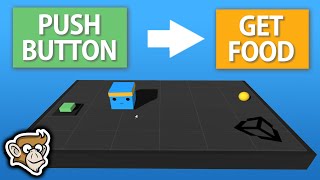
Imitation learning is a technique where an agent learns to perform a task by observing and imitating the actions of an expert or a demonstration. This approach is particularly useful when the task is complex or difficult to define, and the agent can learn from the demonstrations without requiring explicit rewards or feedback. The goal of imitation learning is to enable the agent to learn a policy that can reproduce the expert's behavior, often using techniques such as embeddings and transformers to represent the observations and actions.
Think of imitation learning like a child learning to ride a bike by watching and imitating their parent. Imagine the child observing the parent's actions, such as balancing and steering, and then trying to repeat them. As the child practices, they learn to ride the bike more smoothly and efficiently, just like an agent learning to perform a task through imitation learning. Think of the parent's actions as the expert demonstrations, and the child's attempts to ride the bike as the agent's attempts to learn and imitate the expert's behavior.
Why does Imitation Learning matter?
Imitation learning matters because it allows agents to learn from experts and demonstrations, which can be more efficient and effective than traditional reinforcement learning methods. Practitioners and builders care about imitation learning because it can be used to develop autonomous systems that can perform complex tasks, such as robotics and self-driving cars, without requiring extensive manual programming or training data. Imitation learning can also be used to improve the performance of existing systems by fine-tuning their policies to match the expert's behavior.
How does Imitation Learning work?
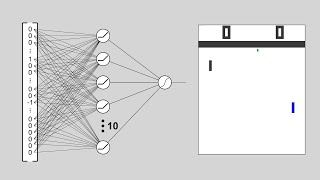
Imitation learning works by using a combination of observation, demonstration, and reinforcement learning to train an agent to perform a task. The agent observes the expert's actions and learns to imitate them, often using techniques such as behavioral cloning or inverse reinforcement learning. The agent can also use training data, such as video recordings or sensor readings, to learn from the demonstrations and improve its policy over time. The use of transformers and embeddings can help the agent to represent the observations and actions in a more compact and meaningful way, which can improve the efficiency and effectiveness of the learning process.
Real-world applications
Imitation learning has many real-world applications, including robotics, self-driving cars, and autonomous drones. For example, a robot can learn to perform a complex task, such as assembly or manipulation, by observing and imitating a human expert. Self-driving cars can learn to navigate through complex environments by imitating the driving behavior of human experts. Autonomous drones can learn to perform tasks, such as surveillance or package delivery, by imitating the behavior of human pilots.
Common misconceptions
One common misconception about imitation learning is that it requires a large amount of training data or explicit rewards, which is not always the case. Imitation learning can be used with limited training data or without explicit rewards, and the agent can still learn to perform the task effectively. Another misconception is that imitation learning is limited to simple tasks, which is not true. Imitation learning can be used to learn complex tasks, such as robotics and self-driving cars, by using techniques such as hierarchical reinforcement learning or multi-task learning.
Future directions
Imitation learning is an active area of research, and there are many potential future directions, including the use of imitation learning for multi-agent systems, the development of more efficient and effective algorithms, and the application of imitation learning to new domains, such as healthcare or education.