What is Foundation model orchestration?
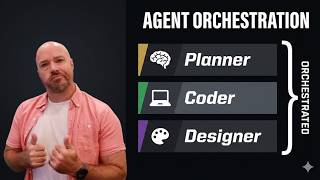
Foundation model orchestration is the practice of linking several large pre‑trained models—like language, vision, or multimodal models—so they can share data, tasks, and results in a single workflow. Instead of using one model in isolation, orchestration stitches them together like building blocks.
Think of a restaurant kitchen where the salad chef, grill master, and pastry chef each specialize in their dish, and a head chef coordinates who prepares what and when, delivering a complete meal efficiently.
Why does it matter?
Product teams need richer capabilities than any single model can provide. By orchestrating models, they can answer complex user requests, combine text and images, or switch between fast cheap models and slower high‑quality ones. This reduces cost, improves performance, and speeds up feature rollout.
How does it work?
Orchestration typically relies on a control layer (often a lightweight service or workflow engine) that decides which model to call, passes inputs, and merges outputs. The control layer may use rules, prompts, or a small decision‑making model to route requests. Data is formatted to match each model’s API, and results are combined—e.g., a vision model extracts objects, a language model writes a description, and a summarizer condenses it.
Real-world applications
1. Customer‑support bots that first classify intent with a fast model, then generate a detailed answer using a larger language model, and finally add relevant screenshots using a vision model.
2. E‑commerce platforms that generate product descriptions (language model), create background‑removed images (vision model), and rank recommendations (retrieval model) in one seamless pipeline.
3. Content creation suites that translate text, generate accompanying illustrations, and then apply style transfer, all coordinated by an orchestration engine.
Common misconceptions
People often think orchestration is just calling models one after another, but effective orchestration includes smart routing, parallel execution, and result merging to avoid latency spikes. Another myth is that orchestration always adds huge cost; with proper model selection and caching, it can actually lower overall expense compared to using a single massive model for every task.