What is Explainable Uncertainty Estimation?
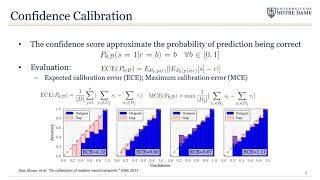
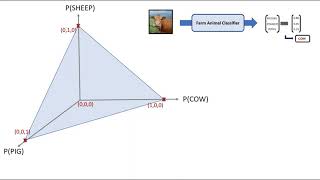
Explainable Uncertainty Estimation is a technique used in machine learning to quantify and explain the uncertainty of a model's predictions. This is important because AI models are not always 100% sure about their predictions, and being able to estimate this uncertainty can help in making more informed decisions. By understanding where a model is uncertain, practitioners can identify areas where the model needs improvement or where more data is needed.
Think of Explainable Uncertainty Estimation like a weather forecast. Just as a weather forecast provides a probability of rain, an AI model can provide a probability of its prediction being correct. Imagine a doctor using an AI system to diagnose a disease, and the system provides a 80% chance of the diagnosis being correct, but also indicates that there is a 20% chance that it is wrong. This uncertainty estimation can help the doctor make a more informed decision about the diagnosis and treatment.
Why does it matter?
Explainable Uncertainty Estimation matters because it helps build trust in AI systems. If a model is uncertain about a prediction, it's important to know this so that the prediction is not relied upon too heavily. This is particularly important in high-stakes applications such as healthcare or finance, where incorrect predictions can have serious consequences. By estimating uncertainty, practitioners can also identify biases in the model and take steps to mitigate them.
How does it work?
Explainable Uncertainty Estimation works by using various techniques such as Bayesian neural networks, Monte Carlo dropout, or bootstrapping to estimate the uncertainty of a model's predictions. These techniques provide a way to quantify the uncertainty of a prediction, which can then be used to make more informed decisions. For example, a model may predict that a patient has a certain disease with 80% certainty, but the uncertainty estimation may indicate that there is a 20% chance that the model is wrong.
Real-world applications
Explainable Uncertainty Estimation has many real-world applications. For example, in self-driving cars, uncertainty estimation can be used to determine when a car is unsure about its surroundings and should slow down or ask for human intervention. In healthcare, uncertainty estimation can be used to determine when a model is unsure about a diagnosis and should recommend a second opinion. In finance, uncertainty estimation can be used to determine when a model is unsure about a stock prediction and should recommend a more cautious approach.
Common misconceptions
One common misconception about Explainable Uncertainty Estimation is that it is only useful for high-stakes applications. However, uncertainty estimation can be useful in any application where the model's predictions need to be trusted. Another misconception is that uncertainty estimation is only possible with certain types of models, such as Bayesian neural networks. However, there are many techniques that can be used to estimate uncertainty, regardless of the type of model being used.
Future directions
Explainable Uncertainty Estimation is an active area of research, with many new techniques and applications being developed. For example, researchers are working on developing new methods for estimating uncertainty that are more efficient and scalable than current methods. They are also working on developing new applications of uncertainty estimation, such as in natural language processing and computer vision.