What is Diffusion guidance?
Diffusion guidance is a way to influence the image or data a diffusion model creates by adding an extra directional signal during generation. It works like a compass that nudges the model toward a specific goal while it iteratively refines its output.
Think of a diffusion model as a blindfolded sculptor shaping a block of marble; diffusion guidance is like a voice giving the sculptor gentle nudges toward the exact shape you want.
Why does it matter?
Practitioners care because plain diffusion models can be unpredictable or produce generic results. Guidance lets designers, product managers, and developers produce more controllable, higher‑quality outputs without retraining the whole model. This reduces development time and cost while expanding creative possibilities.
How does it work?
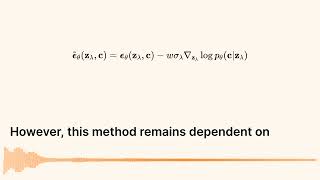
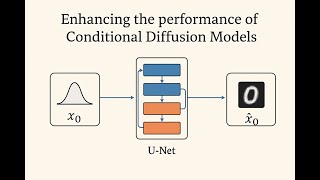
A diffusion model starts with random noise and gradually removes it, step by step, to form a final image or data point. Diffusion guidance injects an extra gradient—often derived from a classifier, a text prompt, or another model—at each step. This gradient tells the model which direction reduces a loss related to the desired attribute, effectively pulling the generation toward that attribute while still following the model’s learned distribution.
Real-world applications
1. **Text‑to‑image tools**: By adding a language‑based guidance signal, services like DALL·E or Stable Diffusion can produce images that more closely match a user’s description.\n2. **Medical imaging**: Guidance from a diagnostic classifier can steer a diffusion model to generate realistic scans that highlight specific pathologies for training data augmentation.\n3. **Creative design**: Brands can guide a diffusion model to generate variations of a logo that respect style guidelines, saving designers hours of manual tweaking.
Common misconceptions
- **Guidance = retraining**: Some think you must fine‑tune the entire diffusion model; in reality, guidance works at inference time, leaving the base model unchanged.\n- **More guidance always improves results**: Over‑strong guidance can force the model into unrealistic corners, reducing diversity and visual fidelity.