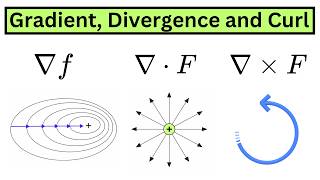
What is a Gradient?
A gradient is a measure of how much change occurs in a system when one of its parameters is varied. It's a fundamental concept in mathematics and computer science, used to optimize and improve the performance of various systems, including artificial intelligence models like transformers. Gradients help us understand the relationship between different variables in a system.
Think of a gradient like a map that shows the steepness of a hill. Imagine you're hiking and want to find the easiest path to the top of a hill. A gradient would show you the direction and steepness of the hill, allowing you to adjust your path to avoid the steepest parts and find the most efficient route. Similarly, in machine learning, gradients help us find the most efficient path to optimize a model's performance, by adjusting its parameters in the direction that minimizes errors and improves predictions.
Why does Gradient matter?
Gradients matter because they allow us to optimize complex systems, like neural networks, by adjusting their parameters to minimize errors and improve performance. This is crucial in machine learning, where models are trained on large datasets to learn patterns and make predictions. Practitioners care about gradients because they enable the efficient training of models, which is essential for many real-world applications, including image recognition, natural language processing, and recommender systems.
How does Gradient work?
A gradient measures the rate of change of a system's output with respect to one of its inputs. In the context of machine learning, gradients are used to update the model's parameters during training, by adjusting them in the direction that minimizes the error between predicted and actual outputs. This process is repeated iteratively, with the model's parameters being adjusted based on the gradient of the error function, until the model converges to an optimal solution. The use of gradients in training data allows for more efficient optimization of models, including those using embeddings.
Real-world applications
Gradients are used in many real-world applications, including computer vision, natural language processing, and robotics. For example, in image recognition, gradients are used to optimize the parameters of a neural network to improve its ability to classify images. In natural language processing, gradients are used to optimize the parameters of a language model to improve its ability to generate coherent text. In robotics, gradients are used to optimize the control policies of robots to improve their ability to perform complex tasks.
Common misconceptions
One common misconception about gradients is that they are only used in machine learning. However, gradients have a much broader range of applications, including physics, engineering, and economics. Another misconception is that gradients are only used to optimize systems, when in fact they can also be used to analyze and understand the behavior of complex systems, including those using transformers and other AI concepts.
Conclusion
In conclusion, gradients are a fundamental concept in mathematics and computer science, with a wide range of applications in machine learning, physics, engineering, and economics. Understanding gradients is essential for optimizing and improving the performance of complex systems, including artificial intelligence models.