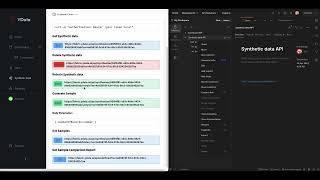
What is Synthetic Data Fabric?
Synthetic Data Fabric is a connected platform that generates fake but realistic data, organizes it, and makes it available to AI teams on demand. It combines data generators, metadata catalogs, and delivery APIs into one seamless layer.
Think of a Synthetic Data Fabric as a virtual kitchen where chefs can instantly whip up any dish they need—spices, ingredients, and recipes are pre‑arranged, so they never run out of food for taste‑tests.
Why does it matter?
Real data is often scarce, expensive, or privacy‑restricted. A fabric lets product managers and designers quickly get the right kind of data without legal hurdles, speeding up model development and reducing bias. It also helps companies comply with regulations like GDPR by avoiding the use of personal information.
How does it work?
First, a set of generators—rule‑based scripts, simulation engines, or generative AI models—produce synthetic records that match the statistical properties of the target domain. Next, a metadata layer tags each record with provenance, quality scores, and usage constraints. Finally, APIs or data pipelines deliver the data to downstream tools (e.g., model training notebooks, testing suites) in the format the team needs.
Real‑world applications
1. Autonomous‑vehicle developers create endless street‑scene images to test perception models without driving a car on real roads. 2. Healthcare startups generate patient‑like records to train diagnostic algorithms while keeping actual patient data private. 3. E‑commerce platforms simulate shopper behavior during holiday spikes to stress‑test recommendation engines before launch.
Common misconceptions
People often think synthetic data is always low‑quality, but when generators are calibrated to real distributions, the data can be as useful as real data for many tasks. Another myth is that a fabric replaces all real data; in practice it complements real data, filling gaps where collection is hard or risky.