What is Low-Rank Adaptation (LoRA)?
Low-Rank Adaptation, or LoRA, is a method for customizing large language models by inserting small, trainable matrices that capture new knowledge while keeping the main model unchanged.
Think of a massive library where you want to add a new wing for a specific topic; instead of rebuilding the whole building, you attach a small, modular extension that houses the new books while the original library stays untouched.
Why does it matter?
How does it work?
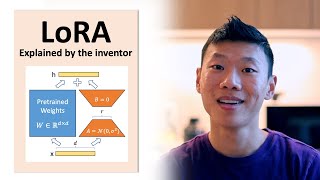
Instead of updating every weight in the model, LoRA represents the update as the product of two low‑dimensional matrices (rank‑r). These matrices are inserted into each linear layer as an additive term. During adaptation, only the low‑rank matrices are trained; the original weights stay frozen. Because the added parameters are tiny—often less than 1% of the full model—the training data and compute required drop dramatically.
Real-world applications
1. **Customer support bots**: A company can adapt a general‑purpose language model to answer product‑specific questions by training LoRA on a few thousand internal FAQ entries.
2. **Personalized recommendation engines**: E‑commerce platforms fine‑tune a base model to reflect a user’s past behavior, improving relevance without re‑training the whole system.
3. **Domain‑specific content creation**: Legal firms use LoRA to teach a model the precise language of contracts, enabling faster draft generation while preserving the model’s broader linguistic abilities.
Common misconceptions
*Misconception 1*: LoRA completely replaces the original model. In fact, the base model remains intact; LoRA merely adds a lightweight overlay.
*Misconception 2*: Because LoRA is small, it cannot capture complex new tasks. Properly chosen rank and sufficient task data allow LoRA to achieve performance close to full fine‑tuning for many practical scenarios.