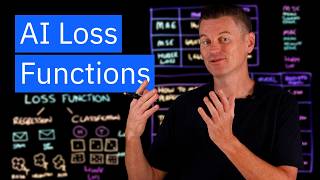
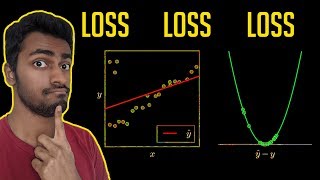
A loss function is a mathematical formula used in machine learning to measure the difference between the AI model's predictions and the actual correct answers. This difference is known as the 'loss' or 'error'. The goal of the model is to minimize this loss, which means it tries to make predictions that are as close to the correct answers as possible. The loss function is what helps the model learn from its mistakes and improve over time.
The choice of loss function depends on the specific problem the model is trying to solve. For example, if the model is trying to predict a continuous value, such as a price or a temperature, a different loss function would be used than if it were trying to predict a category, such as a product type or a disease diagnosis. The loss function is a critical component of the machine learning process, as it determines how the model will learn and improve.
In addition to measuring error, the loss function also guides the model's learning process. By minimizing the loss, the model is able to adjust its parameters and improve its predictions. This process is repeated multiple times, with the model making predictions, calculating the loss, and adjusting its parameters until it reaches a satisfactory level of accuracy.
The most common loss functions used in machine learning are mean squared error and cross-entropy. Mean squared error is used for regression problems, where the model is trying to predict a continuous value. Cross-entropy is used for classification problems, where the model is trying to predict a category.
Overall, the loss function is a fundamental concept in machine learning, and is used in a wide range of applications, from image recognition to natural language processing. By understanding how loss functions work, developers can build more accurate and effective machine learning models.
Think of a loss function like a GPS navigation system. Imagine you're trying to get to a specific destination, but you're not sure which route to take. The GPS system uses a loss function to calculate the difference between your current location and your desired destination, and then provides turn-by-turn directions to help you get there. Similarly, a loss function in machine learning helps the model navigate the space of possible solutions and find the best path to the correct answer.