What is a Knowledge Graph?
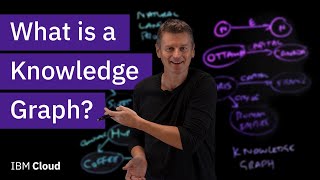
A knowledge graph is a visual representation of knowledge that illustrates relationships between different concepts, entities, and objects. It's a network of interconnected nodes, where each node represents an entity, and the edges represent the relationships between them. This complex network allows for the organization and querying of large amounts of data in a flexible and scalable way.
Think of a knowledge graph like a vast, interconnected web of concepts and entities, similar to a social network, but instead of people, the nodes represent ideas, objects, and relationships. Imagine a massive library where each book represents a concept, and the books are connected by threads that represent the relationships between them, allowing you to navigate and explore the vast expanse of human knowledge.
Why does Knowledge Graph matter?
Knowledge graphs are essential in various artificial intelligence applications, including natural language processing, question answering, and decision support systems. They provide a framework for representing knowledge in a machine-readable format, enabling computers to reason and draw inferences about the data. This has significant implications for areas like search engines, recommendation systems, and expert systems, where knowledge graphs can be used to improve the accuracy and relevance of results.
How does Knowledge Graph work?
A knowledge graph typically consists of entities, relationships, and concepts, which are represented as nodes and edges in a graph data structure. The graph is constructed by extracting information from various sources, such as text documents, databases, and user feedback, and then integrating this information into a unified representation. This process often involves techniques like entity recognition, relationship extraction, and semantic reasoning, which are used to identify and connect the nodes in the graph. Related AI concepts like embeddings and transformers can be used to improve the efficiency and effectiveness of these processes.
Real-world applications
Knowledge graphs have numerous applications in real-world scenarios, such as Google's search engine, which uses a massive knowledge graph to provide accurate and relevant search results. Another example is Facebook's entity disambiguation, which relies on a knowledge graph to identify and distinguish between different entities with the same name. Additionally, knowledge graphs are used in recommendation systems, like Netflix's content recommendation engine, to suggest personalized content to users based on their viewing history and preferences.
Common misconceptions
One common misconception about knowledge graphs is that they are only used for simple applications, like data integration and querying. However, knowledge graphs can be used for much more complex tasks, like reasoning, inference, and decision-making. Another misconception is that knowledge graphs are static and unchanging, when in fact they can be dynamic and adaptive, updating themselves in response to new information and changing circumstances.
Future directions
The development of knowledge graphs is closely tied to advancements in related AI areas, like natural language processing and machine learning. As these technologies continue to evolve, we can expect to see more sophisticated and powerful knowledge graphs, capable of representing and reasoning about complex, nuanced concepts and relationships.