What is GAN?
A GAN, or Generative Adversarial Network, is a type of artificial intelligence model that generates new, synthetic content that resembles existing data. This content can be images, videos, music, or even text. GANs consist of two neural networks that work together to produce this new content.
Think of a GAN like a talented artist who is trying to create a fake painting that looks like a real one. The artist is like the generator, and the art critic is like the discriminator. The artist creates a painting, and the critic evaluates it and tells the artist whether it is realistic or not. The artist uses this feedback to improve their painting, and the critic uses the painting to improve their evaluation skills. Over time, the artist becomes better and better at creating realistic paintings, and the critic becomes better and better at evaluating them. Imagine this process happening many times, with the artist and critic continually improving their skills, and you have a basic idea of how a GAN works.
Why does GAN matter?
GANs are important because they have many practical applications, such as generating new images for video games, creating special effects for movies, and even helping with data augmentation for training other AI models like transformers. Practitioners and builders care about GANs because they can be used to create highly realistic content that is often indistinguishable from real data.
How does GAN work?
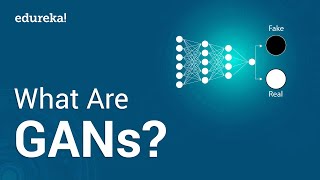
A GAN works by having one neural network, called the generator, create new content, and another neural network, called the discriminator, evaluate the generated content and tell the generator whether it is realistic or not. The generator uses this feedback to improve its creations, and the discriminator uses the generator's output to improve its evaluation skills. This process is similar to training data for other AI models, but with GANs, the training data is generated on the fly.
Real-world applications
GANs are used in many real-world applications, such as generating new images for video games, creating special effects for movies, and helping with data augmentation for training other AI models. For example, GANs can be used to generate new faces for video game characters, or to create realistic landscapes for movies. GANs can also be used to generate new music or even entire videos.
Common misconceptions
One common misconception about GANs is that they are only used for generating images. While GANs are often used for image generation, they can be used to generate many other types of content, including music, videos, and even text. Another misconception is that GANs are only used for creative applications, when in fact they have many practical uses, such as data augmentation and anomaly detection.
Future of GAN
The future of GANs is exciting, with many potential applications in fields such as healthcare, finance, and education. For example, GANs could be used to generate synthetic medical images for training AI models, or to create personalized educational content for students. As GANs continue to evolve, we can expect to see many new and innovative applications of this technology.