What is Diffusion Prior?
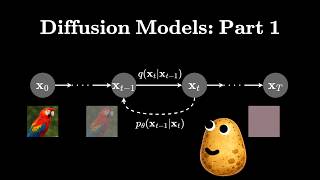
A diffusion prior is a neural network that learns to map a simple random vector to a rich, abstract representation of data—often the latent space of an image or text model. It works like the first step in a two‑stage diffusion pipeline, providing a coarse sketch that the later diffusion model refines into a full output.
Think of a diffusion prior as an architect drawing a blueprint before the construction crew builds the house; the blueprint captures the overall layout, while the crew fills in walls, paint, and fixtures.
Why does it matter?
Practitioners use diffusion priors to speed up generation and improve quality. By separating the high‑level reasoning (what the image should contain) from low‑level pixel synthesis, they can train smaller, faster generators and reuse the same prior across multiple tasks.
How does it work?
During training, the prior receives noisy latent codes and learns to denoise them back to clean embeddings that correspond to real data. At inference time, you feed pure noise, the prior produces a clean embedding, and a downstream diffusion model (often called the decoder) turns that embedding into an image, audio, or text. The process mirrors classic diffusion but operates in a compressed latent space, making it computationally cheaper.
Real‑world applications
1. **Text‑to‑Image generation**: Systems like Stable Diffusion first run a diffusion prior to create a text‑conditioned image embedding, then a decoder renders the final picture.
2. **Cross‑modal translation**: A video‑to‑audio pipeline can use a diffusion prior to generate a semantic audio representation before synthesizing waveforms.
3. **Rapid prototyping**: Designers can generate many concept sketches quickly by reusing a pre‑trained prior and swapping in lightweight decoders for different styles.
Common misconceptions
- *It replaces the diffusion model*: The prior is a complementary stage, not a substitute. The final quality still depends on the decoder.
- *It eliminates randomness*: The prior still starts from noise, so each run can produce different embeddings unless you fix the random seed.
Overall, diffusion priors let teams split reasoning and rendering, leading to faster, more modular AI systems.