What is Causal Manipulation?
Causal manipulation refers to the process of intentionally changing the cause of an event to observe the effect. This concept is crucial in understanding the relationships between variables in a system. By manipulating the cause, researchers can identify the underlying mechanisms that drive the effect.
Think of causal manipulation like adjusting the thermostat in your home. By changing the temperature setting, you can observe how the room temperature changes, allowing you to understand the causal relationship between the thermostat and the room temperature. Imagine being able to adjust the variables in a complex system, like a machine learning model, to see how the outcomes change, and you'll have a sense of what causal manipulation is all about.
Why does it matter?
Causal manipulation matters because it allows practitioners to make informed decisions based on the underlying causes of a phenomenon. In machine learning, understanding causal relationships is essential for developing models that can generalize well to new situations. By identifying the causes of an event, practitioners can develop more effective interventions and make better predictions.
How does it work?
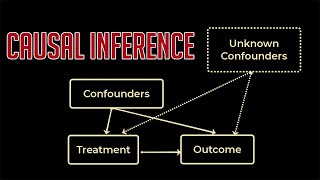
Causal manipulation works by intervening in a system and observing the resulting effects. This can be done through experiments, where the cause is manipulated, and the effect is measured. In machine learning, causal manipulation can be achieved through techniques such as causal inference, which involves using statistical methods to identify causal relationships. Related AI terms, such as causal graphs and structural causal models, are also used to represent and analyze causal relationships.
Real-world applications
Causal manipulation has numerous real-world applications, including medicine, where researchers use causal manipulation to develop new treatments. For example, a study might investigate the effect of a new drug on a disease by manipulating the dosage and observing the resulting effects. In social sciences, causal manipulation can be used to evaluate the impact of policies on social outcomes. Additionally, in business, causal manipulation can be used to optimize marketing campaigns by identifying the causes of customer behavior.
Common misconceptions
One common misconception about causal manipulation is that it is the same as correlation. However, correlation does not imply causation, and causal manipulation is necessary to establish a causal relationship. Another misconception is that causal manipulation is only relevant in experimental settings, when in fact it can be applied in a variety of contexts, including observational studies and machine learning models.