What is Causal Intervention?
Causal intervention is a concept in artificial intelligence that involves identifying and understanding the cause-and-effect relationships between variables in a system. It is a crucial aspect of decision-making and reasoning in AI systems. By intervening in a system, AI models can determine the causal effects of their actions.
Think of causal intervention like a scientist conducting an experiment. Imagine a researcher who wants to know the effect of a new medicine on a patient's health. The researcher intervenes in the system by giving the patient the medicine and then measures the outcome. This is similar to how causal intervention works in AI systems, where the model intervenes in a system and measures the outcome to determine the causal effects of its actions. Think of it as a controlled experiment, where the AI model is the researcher and the system is the patient.
Why does it matter?
Causal intervention matters because it enables AI systems to make informed decisions and take actions that achieve desired outcomes. Practitioners care about causal intervention because it helps them to develop more effective and efficient AI models. For instance, in healthcare, causal intervention can help AI systems determine the most effective treatment for a patient.
How does it work?
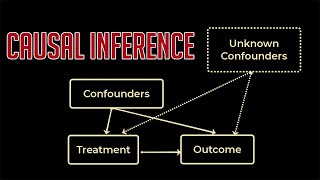
Causal intervention works by using statistical and machine learning techniques to analyze data and identify causal relationships. It involves using techniques such as causal graphs and structural causal models to represent the relationships between variables. By intervening in a system, AI models can test hypotheses and determine the causal effects of their actions.
Real-world applications
Causal intervention has numerous real-world applications, including healthcare, finance, and education. For example, in healthcare, causal intervention can help AI systems determine the most effective treatment for a patient. In finance, causal intervention can help AI systems determine the causal effects of economic policies. In education, causal intervention can help AI systems determine the most effective teaching methods.
Common misconceptions
One common misconception about causal intervention is that it is the same as correlation. However, correlation does not imply causation, and causal intervention involves identifying the underlying causal relationships between variables. Another misconception is that causal intervention is only applicable to simple systems, when in fact it can be applied to complex systems with multiple variables and relationships.
Future directions
Causal intervention is an active area of research, and future directions include developing more advanced techniques for causal discovery and inference. For instance, researchers are exploring the use of deep learning techniques, such as causal neural networks, to improve causal intervention. Additionally, there is a growing interest in applying causal intervention to real-world problems, such as climate change and social inequality.