What is an Artificial Neural Network (ANN)?
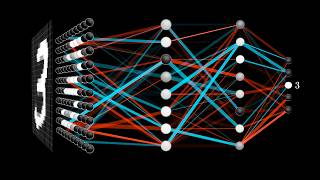
An Artificial Neural Network (ANN) is a computer system inspired by the structure and function of the human brain. It is composed of interconnected nodes or neurons that process and transmit information. ANNs are designed to recognize patterns in data and learn from experience, similar to how humans learn from their environment.
Think of an Artificial Neural Network like a team of specialists working together to solve a complex problem. Imagine a group of doctors, each with their own expertise, analyzing a patient's symptoms and test results to diagnose a disease. Each doctor looks at the data from their own perspective, and then they share their findings with the other doctors, who use that information to inform their own analysis. This process continues until the team reaches a consensus on the diagnosis, which is similar to how an ANN processes input data and reaches a conclusion through the interactions of its interconnected nodes.
Why does ANN matter?
ANNs are a crucial component of many artificial intelligence systems, including those that use transformers for natural language processing and generative models for image synthesis. Practitioners and builders care about ANNs because they enable computers to perform complex tasks, such as image recognition, speech recognition, and decision-making, without being explicitly programmed. ANNs have many applications in areas like healthcare, finance, and transportation, making them a vital tool for many industries.
How does ANN work?
An ANN works by receiving input data, which is then processed through multiple layers of interconnected nodes or neurons. Each node applies a non-linear transformation to the input data, allowing the network to learn complex patterns and relationships. The network is trained on a dataset, which enables it to adjust the connections between nodes and improve its performance over time. This process is similar to how humans learn from experience, where the connections between brain cells are strengthened or weakened based on the outcomes of their actions.
Real-world applications
ANNs have many real-world applications, including image recognition systems used in self-driving cars, speech recognition systems used in virtual assistants, and predictive models used in financial forecasting. For example, ANNs can be used to analyze medical images, such as X-rays and MRIs, to help doctors diagnose diseases more accurately. They can also be used to analyze customer data, such as purchase history and browsing behavior, to help businesses personalize their marketing campaigns.
Common misconceptions
One common misconception about ANNs is that they are conscious or have the ability to think like humans. However, ANNs are simply computer programs designed to perform specific tasks, and they do not possess consciousness or self-awareness. Another misconception is that ANNs require a large amount of training data to be effective, which is not always the case. While large datasets can be beneficial, ANNs can also be trained on smaller datasets using techniques such as data augmentation and transfer learning.
Future developments
The development of ANNs is an ongoing area of research, with new techniques and architectures being proposed regularly. For example, the use of transformers and attention mechanisms has improved the performance of ANNs in natural language processing tasks, while the use of generative models has enabled ANNs to generate realistic images and videos. As ANNs continue to evolve, we can expect to see even more innovative applications of this technology in the future.