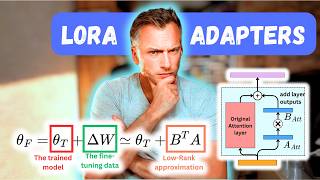
What is Adapter Tuning?
Adapter tuning is a method where tiny neural modules—called adapters—are inserted into each layer of a large pre‑trained model. Instead of updating the whole model, only these adapters are trained on the new data.
Think of a universal remote that works with any TV, but you add a small plug‑in for each brand to access special functions; the remote stays the same while the plug‑ins (adapters) give you new capabilities.
Why does it matter?
How does it work?
A pre‑trained model is kept frozen; its original weights are not changed. Between existing layers, small feed‑forward networks (often a down‑projection, non‑linearity, and up‑projection) are added. During training, gradients flow only through these adapters, updating their few parameters while the backbone stays static. After training, the adapters are stored alongside the original model and can be swapped in or out for different tasks.
Real‑world applications
1. **Customer support chatbots** – A single large language model can serve many product lines; each line gets its own adapter that captures domain‑specific terminology without re‑training the whole model.
2. **Multilingual translation** – One backbone model supports dozens of languages; adapters fine‑tuned on low‑resource languages enable high‑quality translation with minimal data.
3. **Personalized recommendation engines** – Brands can attach adapters that learn individual user preferences, updating quickly as behavior changes, while the core recommendation model remains stable.
Common misconceptions
*Adapter tuning is not a shortcut that eliminates any learning; the adapters still need enough task‑specific data to be effective.*
*Adapters are not just “tiny layers” that can be ignored—they often include normalization and gating mechanisms that are crucial for stable training.*