What is Clustering?
Clustering is a technique used in artificial intelligence to group similar items or data points into clusters. This technique is useful for identifying patterns and relationships in data. It helps in organizing and understanding complex data by dividing it into smaller, more manageable groups.
Think of clustering like organizing a library, where books are grouped together based on their topics or authors. Imagine a librarian using clustering to group books into categories, such as fiction, non-fiction, or biographies, making it easier for readers to find what they are looking for. Similarly, clustering in artificial intelligence helps to group similar data points together, making it easier to understand and analyze complex data.
Why does Clustering matter?
Clustering matters because it allows practitioners and builders to identify and understand the underlying structure of their data. This can be useful in a variety of applications, such as customer segmentation, image recognition, and anomaly detection. By using clustering, developers can build more accurate models and make more informed decisions.
How does Clustering work?
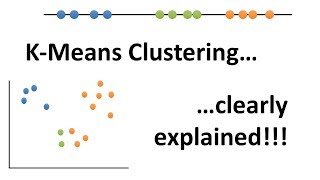
Clustering works by using algorithms to identify similarities and differences between data points. These algorithms can be based on various techniques, such as k-means, hierarchical clustering, or density-based clustering. The choice of algorithm depends on the type of data and the desired outcome. For example, k-means clustering is useful for dividing data into a fixed number of clusters, while hierarchical clustering is useful for identifying clusters of varying sizes.
Real-world applications
Clustering has many real-world applications, including customer segmentation, image recognition, and anomaly detection. For example, a company might use clustering to group customers based on their buying behavior, allowing them to tailor their marketing efforts to specific groups. Similarly, clustering can be used in image recognition to group similar images together, making it easier to search and retrieve images. Clustering can also be used in anomaly detection to identify unusual patterns in data, such as fraudulent transactions.
Common misconceptions
One common misconception about clustering is that it is the same as classification. While both techniques are used to group data, classification involves assigning labels to data points based on predefined categories, whereas clustering involves grouping data points based on similarities and differences. Another misconception is that clustering is only useful for numerical data, when in fact it can be used with a variety of data types, including text and images.
Limitations and Future Directions
Clustering is not without its limitations, and there are many future directions for research and development. For example, clustering can be sensitive to the choice of algorithm and parameters, and it can be difficult to evaluate the quality of the clusters. Additionally, clustering can be computationally intensive, making it challenging to apply to large datasets. Despite these limitations, clustering remains a powerful technique for understanding and analyzing complex data, and it will likely continue to play an important role in the development of artificial intelligence, including the use of transformers and embeddings.